Talking to Myself in Public |

|
|
I've prudently decided not to discuss how I feel about the assassination attempt on the guy who told the grieving parents of children murdered in a school shooting to "get over it." I will say that I've never wished death on anyone for having different political views than me, but I'm tired of being gaslit that opposition to Mr. "Grab 'em by the pussy" is merely a matter of differing political views.
I moved into my new place this week. It was the only place I considered because I knew that if I looked at more options I would just get more stressed about choosing one. I also knew from past experience that if I prayed for guidance, like I stopped doing years ago, I would get no response and wear myself out straining to hear one. This place was the cheapest I was going to find anywhere and it didn't sound horrible, so I wanted it and I went for it. I think that's how I need to live my life - just going with the flow, not trying to "follow the Holy Ghost." I'll try to be informed and make good decisions, of course, but I've come to realize that because I'm not a billionaire, I actually have zero control over most of the things that affect my life. Agency shmagency. No, it doesn't piss me off at all, why do you ask? I thought it would be just me in the basement and the two guys upstairs, one of whom is a friend of my friend, so it felt better than moving in with complete strangers. But I realized the basement was already inhabited as soon as I descended the stairs. The first thing I noticed was the smell, the most beautiful smell I've ever smelled. It assailed me every time I went up or down to move my stuff. I'd soon realize it was there to mask the cigarette smell, and now I've already acclimated to it, which stinks, pun intended. The second thing I noticed was the decor that had obviously been placed by an old woman. She was the first one I met, and then I thought it was just the two of us, and that was awkward. I was rather relieved when a younger guy introduced himself. And there's a younger woman too, but I've barely seen her, and I haven't talked to her, except that today she left me a note asking me not to put stuff in her cupboard. Time will tell if the smiley face and the word "Respectfully" were sincere or passive-aggressive. They worried me, but I'm trying not to jump to conclusions. My friend who told me about the place had said something about me maybe having female roommates, but then for some reason he caught himself and didn't pursue that subject, and neither did I because I didn't want his friend to not let me have it, and then I forgot about that. I'm cool with having female roommates. I had a de facto female roommate several years ago when my roommate's girlfriend or wife moved in with us and the landlord didn't care. Sometimes she walked around the kitchen in a towel like she didn't notice I was there. One time she tried to convince my roommate to let her kiss me, quote, "so that he can say he's kissed a black girl and I can say I've kissed a white guy," close quote, but he didn't go for that. I swear. If you don't believe me, you can pray about it and know for yourself that it's true. Anyway, I'm neutral on this current situation except that I like it because it would probably scandalize my conservative Mormon parents. My roommates are all kind of weird. I should fit right in. They're pretty quiet and keep to themselves a lot, which is great. I hope we can be friends without them inconveniencing me too much. There are two bathrooms right next to each other, as if the basement was designed with this living arrangement in mind. The bathrooms have sliding wooden doors that are only attached at the top and lock with a little hook and loop. The shower curtains are transparent so that psycho killers can't sneak up on you. The water doesn't get as hot as I'd like, and I had to close the air conditioning vent to stop it from blasting my naked wet body every time I got out. The air conditioning in this place runs constantly, and I mean constantly. The vent in my room was already closed, but I piled blankets up against it as well. My room felt like a refrigerator for the first couple of days. I guess I should be grateful for the privilege of freezing my ass off during a record-breaking heat wave. Oh yeah, I moved to this area just in time for a record-breaking heat wave. It's almost like the climate is changing or something. With that exception, it's a nice area. I live in a quiet suburb, but if I walk two blocks, I'm on a busy city street. I've gone out exploring during the less dangerously hot hours. There are as many Mexican and Asian restaurants in my immediate vicinity as I could possibly want, and a 7-eleven so close that it takes a lot of self-control to not buy a Slurpee every day. I haven't yet seen anything as pretty as the town I left behind. Logan has prettier houses, prettier buildings, and prettier scenery. But with any luck, I'll get to spend more time with my friends who live in nearby cities. I hope they're not always busy doing lame adult stuff. Oh yeah, and my room is full of boxes. I have too much stuff and not enough space. I'll probably leave most of my stuff packed up for however many months or years I'm here. It feels like a temporary situation, but I'm trying to live in the moment and not fantasize about a better future. One where I could afford my own house before I'm ninety, for example.
0 Comments
Prior to my move, I'm once again on vacation with family including my loveable but exhausting little cousins, and I forgot to write a post yesterday. I could have done it while they were all at church, but I did other stuff instead. I have to crank something out now to keep up my goal of writing something every week even if it's garbage.
I've reflected on my legal drug experience last week, trying to figure out if it was the best experience of my life or one of the best experiences of my life, and if so, why. I can imagine someone reading my description and wondering what's so great about a weird and confusing experience like that. First of all, it was inherently interesting because it was like nothing I'd experienced before. Second, as I've realized even more upon reflection, the peace I felt throughout was really incredible. It may have been the only time in my adult life that all my worries didn't just fade to the background but ceased to matter altogether. Even now, as I enjoy time with my family, part of my brain is devoted to the stresses of moving to another city, paying rent, dealing with my property management company for what I hope is the last time, and possibly losing what's left of democracy in my country if the demented lying orange jackass is re-elected because his opponent acted too old during their recent debate and then appoints three more supreme court justices whose life goal is to drag society back a hundred years. But nothing worried me when I was high, and that was great. And then, of course, there were those moments when I felt disconnected from my physical body and connected to the universe. Again, I don't want to overstate those, but as I reflect on them, they were pretty great. I think that if I did this again knowing what to expect and relaxed more, surrendered more, analyzed less, I would get more of that part. I want more of that part. The reason I wanted to try psilocybin, which is not yet legal, except through a religious freedom loophole that I intend to exploit when I'm settled closer to the Divine Assembly church, was to experience death before I die. That's done wonders for the mental health of terminally ill people. Legal mushroom gummies don't contain psilocybin, and I don't know if I can achieve that full experience with them, but what I got was close enough. I want more of it regardless of what it is. Anyway, there's plenty more I could write about besides drugs, but I should go be with my family. Yesterday was my birthday. I was going to write a blog post, but I couldn't log in. Now I have something altogether different to write about than what I was going to write about. I would have written about this anyway, but now I'm not going to wait. A few weeks ago one of my friends had a birthday, and one of her friends gave her some legal mushroom gummies, and she gave me two of them because we've talked about mushrooms as part of our discussions on spirituality. They were two different brands. The first one, as I mentioned, made me exhausted and didn't have any noticeable spiritual effects. I tried the second one last night. I don't know if "spiritual" is the right word, but it sure had effects. I wish my description could do it justice. I don't want to overstate it, but I don't want to downplay it either. I took it around eight p.m. in case it made me exhausted. It took about forty-five minutes to really kick in. I noticed that my mouth was dry and my head felt a little heavy when I moved it, but I didn't know if that was just my imagination. And then since the sun was going down and the insane heat was dissipating, I decided it was time to go toss away some stale bread in the wooded area that I use for compost sometimes. And I thought that maybe I shouldn't be standing near the edge of a steep hill while I was on drugs, but I wasn't feeling very drugged, and I thought it would be fine. A block from my apartment, I decided that I shouldn't be standing near the edge of a steep hill while I was on drugs, and I turned around and went back. I noticed as I walked that my mouth was frozen in a grin. And then reality seemed to close around me like a tunnel, and then I was laying on the couch. Leaving my apartment and coming right back were a distant memory, and I wasn't sure they'd happened at all. I had to look at the kitchen counter and see where I'd placed the bread after I brought it back. That was a recurring theme - ending up back on the couch, things becoming distant memories seconds after I did them, and having to verify over and over that I'd actually done them. The couch was like my home base. My returns to it seemed inevitable, beyond my control. The passage of time became weird. Over and over again, I looked at the clock on the stove and saw that only a minute or five had passed since the last time I'd looked, reassuring myself that the last time I'd looked hadn't been a dream. Since I couldn't remember much of the walk home, short though it was, I thought maybe I'd done something crazy and the neighbors had called the police. With my kitchen windows open, it seemed like everyone in Logan was walking down my quiet little street and being needlessly loud, and every noise made me imagine that the police were coming to my door to be assholes as usual. I got up and looked out the window a few times to verify that they weren't parked out front. But I felt no fear. My heart felt like it wanted to be afraid, but something was gently suppressing it. I just felt warmth and peace. The noises outside and of my heavyseat upstairs neighbor creaking around would have normally been very jarring, since I have misophonia, but now I was able to be fully aware of them and simultaneously remain in my semi-delirious state. I still swore in exasperation a little bit. I wasn't completely at peace yet. After ten minutes or an hour, I got up and closed the windows. Then I looked over and over again to verify that I'd really gotten up and closed the windows, and that I'd failed to close one of them properly.  I felt like my consciousness split into three parts - the delirious drug-addled part doing weird things, the self-aware and skeptical part that analyzed and verified, and a running commentary of how I was going to describe this experience to my friend. Every time I thought of telling her that the first gummy did nothing but this one did something, I laughed a little. But that part faded away as I became more immersed in the experience. These three streams of thought ran alongside each other, intertwined, and very, very fast. I wondered if I was approaching a near-death experience, but nobody said anything about it being so fast. I hoped that consciousness after death didn't run at this speed forever, because it was like a roller coaster and I couldn't get off. Yet despite that preference, I felt no fear and no real discomfort. It was peaceful. I kept mentally stumbling and repeating my thoughts like Porky Pig, and my mouth kept moving along with them. My eyes kept darting all over the place, whether they were open or closed. I had the power to stop these motions, but it was easier to just go along with them. Periodically I moved something to make sure I wasn't paralyzed, but the motions seemed to precede my decisions to move. The word "grounding" kept coming to mind, and I kept feeling the texture of the couch as if I would melt away into an entirely disembodied state otherwise. Over and over again, I had this thought: it was as if I had agency, and yet no agency. Over and over again, I questioned whether this experience was really happening. Over and over again, I reminded myself that I'd taken a drug, so yes, it was really happening. Over and over again, I wondered if this was a dream, but over and over again, I realized that I didn't have the mental capacity to dream this up. I wondered if this would last forever. Again, no fear, but I wished I knew when it would end, because even though it wasn't unpleasant, it would impede my ability to exist in the world if it lasted forever. I thought about how long it would take me to starve if I stayed on the couch all the time, and how long it would probably take for somebody to check on me. I didn't really think I would die in this state, but the possibility occurred to me, and I decided that was fine because I couldn't imagine a better way to die. I wondered if I should try to resist the high or surrender to it. I didn't fear the loss of agency as I thought I should have. When I did relax, close my eyes, and sink into it, I felt as if I melted into outer space and sensed my body right there below me, yet no longer quite so attached to me. I was myself, yet connected to the universe - and this is a part that I don't want to overstate, as I'm sure it wasn't the grand spiritual epiphany that some people have had with drugs, but it was neat and I don't know a better way to describe it. The couch pillow on top of me felt like an extension of myself. I forced myself back into lucidity to verify that there was a couch pillow on top of me. Then I let myself fade again, and it felt like someone embracing me. I randomly thought about an older gentleman I knew growing up who'd just wished me a happy birthday on Facebook. I thought about what a classy, respectable guy he was, and realized that he was probably bothered by how crass I am sometimes on social media, but he stayed my Facebook friend anyway. I decided I should be less crass on social media for his sake. I thought of my upstairs neighbor who gave me a little jar of earplugs one night when all of his squeaking in the kitchen was driving me crazy because my own earplugs were worn out, and I figured he's been very tolerant of me yelling at my stupid computer, so the least I could do was offer to give back his little jar of earplugs (minus the ones I've used). My natural impulse honed by years of poverty to hold onto whatever I can get was replaced by a genuine desire to return his property. And I thought of someone I'd wronged in a more significant way, but since it wouldn't be easy to do anything about that, I let that thought go. Then my mind went through just a few of my traumatic experiences, but I felt no trauma. I wondered at the time, as I do now, if that was a taste of the "life review" that people often describe in near-death experiences and I'm not looking forward to. People describe reliving their lives and feeling how they made other people feel. The first two people I thought of seemed like random choices, though. I'm sure I've caused much more pain to some other people. I coughed sometimes, and I yawned a lot, and tears streamed down my face, and I had to blow my nose. Like the noises, those physical things all seemed like distractions that I registered on a different wavelength without losing my high. I got up a few times to look in the bathroom mirror at my dilated pupils and my moving mouth. Whenever I did, I sang in my mind, to the tune of a Maroon 5 song, "This drug has taken its toll on me..." I thought that was funny. I fell asleep, and then it was 12:23. I felt normal. I made it to bed and got back to sleep in record time. Then I stopped feeling normal. The aforementioned experience continued through the night - in waking, or dreaming, or somewhere in-between, I can't tell. Sometimes I had to check whether I was in bed or still on the couch. Then I got up around quarter after nine, and the real craziness was over. I listened to "Because I Got High" on my morning walk and thought that was funny. I continued to be noticeably high until about six p.m. The mouth and eye movements continued to a much lesser extent, I had to continue grounding myself to a much lesser extent, and I continued to grin and be easily amused by things. Again, I wondered if this altered mental state would be permanent. But in fairness, I was never really normal in the first place. It seems to be over now, even though my pupils are still dilated as I type this. I can't explain why this experience was so great. It was just a wild ride, yet a peaceful one, and it felt good and it blew my mind. Happy birthday to me! I want to do it again, but not soon. And I'm afraid to try a full dose. Yesterday was the four-year anniversary of George Floyd being murdered by police in broad daylight. I had just written a blog post the previous day about American police murdering people, which of course is a very old topic. I wasn't surprised when it immediately happened again, but I was surprised that this time turned out to be the final straw. In the years since then, the United States has taken a few teensy-tiny baby steps toward putting police officers in their place and holding them accountable for their actions, fought every step of the way by Republicans who distrust the government but believe that police officers should have unlimited authority and immunity. I wasn't too shocked yesterday to see them still spreading the lie that George Floyd died of a drug overdose, making tasteless jokes about his death, and/or asserting that he deserved it because he had a criminal history. If Jesus said "Let he among you who is without sin cast the first stone" to a crowd of Republicans, the woman taken in adultery would be a bloody pulp. The responses to this event accelerated my irreversible alienation from my religious community, which had started with the responses to the you-know-what pandemic. I was mortified that people who claimed to be followers of Jesus treated Covid like a joke and prioritized their individual convenience over everyone else's health, and I was mortified that people who claimed to be followers of Jesus had such ass-backward moral compasses that they couldn't see the problem with a police officer kneeling on a handcuffed man's neck for nine and a half minutes. To be fair, though, I think at the time it was being reported as seven and a half minutes. Regardless, I was appalled that Mormons overwhelmingly responded "George Floyd was no saint" instead of "Murder is wrong." One of them told me that police abuse was a lie by the media, when I already knew firsthand that it wasn't because I'd been on the receiving end of it from Hayden Nelson of the Logan City Police Department that January. (Ironically, since the worst day of my life was in January 2020, the rest of the year was an improvement, though it didn't exactly validate my choice not to kill myself after that motherfucker nearly bullied me into it.) I also later got a crash course in police lies and corruption after Captain Curtis Hooley promised to conduct an investigation and share the results with me and then just didn't. And despite what many would claim, the institutional LDS Church with its history of anti-Black racism and its unholy love affair with right-wing politics is far from guiltless in fostering these "cultural" problems. Its teachings and policies are directly to blame for Mormons in Utah being overwhelmingly white and conservative and sometimes never even having met a Black person before. The church's "official" response to this social movement was actually on the right side for a change, but it was much too little, much too late. "God does not love one race more than another," Russell Nelson declared in General Conference that October. Why the hell did we need a prophet to tell us that in 2020? Why wasn't Brigham Young telling us that in 1852? So that caused me some cognitive dissonance and added some more weight to my proverbial shelf. I was thrilled when Dallin H. Oaks said "Black lives matter" at a devotional that same month (followed, of course, by Mormons parsing his words to explain that he didn't mean for us to support the organization Black Lives Matter, which according to them was a terrorist group). Now I don't need an apostle's permission to say "Black lives matter." I don't need to look to men older than my grandparents to validate literally anything. I know right from wrong. Police brutality is wrong. Systemic racism is wrong. Denying that either of those things exist because you've never personally encountered them and you believe in the just-world fallacy is wrong. Derek Chauvin should have been fired and/or prosecuted the first seventeen times people filed conduct complaints against him, and George Floyd should still be here, saint or not. If anyone said "George Floyd was no saint" to me in person, I would punch them in the throat and respond, "Neither am I."  Oh yeah, and then the next year, I was at a church activity where someone told a couple of racist jokes, including one about Black people being afraid of police, and everyone except me laughed. I knew she had no malicious intent, so I didn't want to embarrass her, and I didn't call her out on it. I've regretted that ever since.
My page that includes the full text of LDS Church President Ezra Taft Benson's 1987 talk "To the Mothers in Zion" has undergone a significant spike in traffic in the last couple of days. I can guess why. General Relief Society president Camille Johnson spoke on Friday, and she talked about balancing her education and career with raising a family, without mentioning that she was in direct defiance of the prophet at the time by having a career at all. Countless other Mormon women sacrificed their career ambitions because the prophet told them to. He didn't say, "Make your own decisions based on your individual circumstances." He didn't say, "Motherhood should be your highest priority, but you can do other things too." He said, "Contrary to conventional wisdom, a mother’s calling is in the home, not in the marketplace." He was not ambiguous. He was not open to interpretation. This was only six years before I was born, and when I grew up in the 2000s, I was still being taught at church that married women shouldn't work outside the home if they had a choice. My YSA bishop was also very adamant about that as recently as 2021.
And now, as anyone familiar with its usual lack of transparency and accountability would expect, the LDS Church is quietly pretending that didn't happen and celebrating a woman who disobeyed the prophet. But of course many people are seeing through that and calling it out. And apparently some of them are using my copy of the talk as a source. Glad I could be of help. On the flip side, several Mormons are lying that the church's vendetta against working mothers was just "culture" or the "interpretation" of a few zealots in your ward, and that's also infuriating but not unexpected. I understand all too well the cognitive dissonance that comes from facing the reality that the men you've been taught to revere as mouthpieces for God were as misogynistic as they were racist. Anyway, I formally joined the Unitarian Universalist church today because it's been a good spiritual community that shares my values. It's been at the forefront of social justice movements in the United States instead of getting dragged kicking and screaming behind them like some churches I could mention. I first became aware of it over a decade ago when I had a friend who'd converted to it from the LDS Church, and then I visited it for a religious studies class. I thought the building was weird. It's literally a house. And I understood the appeal of the whole "Love everyone and believe whatever you want" shtick, but I didn't like it. That's exactly the sort of liberal claptrap that I'd been taught to dismiss. Love isn't enough, I thought. You can't just believe whatever you want, I thought. There's objective truth and it matters. At some point, a random woman stopped me on the sidewalk, and I don't remember what she said exactly, but basically she sensed a lot of stress or anxiety in me and suggested I check out Unitarian Universalism, which I didn't. In hindsight, maybe she was led by the Spirit. Or maybe she said that to everybody. Long story short, my perspective has changed. A lot of what I thought was objective truth was actually bullshit, and I have a lot more humility about how much I don't know and probably never will. I still value truth and I still intend to seek after it for the rest of my life, but I no longer think it's the most important thing. I think love is the most important thing after all. Why should God be more concerned about what we believe than how we treat each other? I've increasingly noticed that people who think that way are insufferable if not horrible people. After I lost my faith, I shopped around a little for a new one because I desperately needed the community. And I ended up sticking around with the Unitarian Univeralists, and after a year or so they asked me if I wanted to formally join, and I saw no reason not to. I don't believe it's the "one true religion," and it doesn't claim to be. It's just a community that works for me and a tool for doing good in the world. My imminent departure from Logan puts a bit of a damper on things, but I'll love this congregation while I'm here and then maybe I'll find another in Salt Lake. Things don't have to last forever to be worthwhile. |
"Guys. Chris's blog is the stuff of legends. If you’re ever looking for a good read, check this out!"
- Amelia Whitlock "I don't know how well you know Christopher Randall Nicholson, but... he's trolling. You should read his blog. It's delightful." - David Young 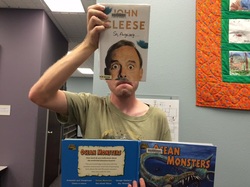

About the AuthorC. Randall Nicholson is a white cisgender Christian male, so you can hate him without guilt, but he's also autistic and asexual, so you can't, unless you're an anti-vaxxer, in which case the feeling is mutual. This blog is where he periodically rants about life, the universe, and/or everything. Archives
July 2024
Categories
All
|
 RSS Feed
